


Kaiyra.designs: A small-batch 3D printing studio with a big personality

It’s late February in Singapore.
The red packets have been opened. The pineapple tarts are down to crumbs. The CNY hype may have officially expired, but several of kaiyra.designs' work still linger in our minds.
Let's rewind a little: our introduction to @kaiyra.designs didn’t begin with Chinese New Year.
It began as a Christmas gift.
This was a piece commissioned by a client we were working with - and when it arrived, what struck us wasn’t just that it was 3D printed.

It was how cheeky and clever it looked. Its colours and quirky proportions.
Apparently, we heard the first iteration looked like a cross between a durian and an olive. It took several rounds of refinement to get those jagged sides just right.
Now, it sits in our office, holding olive keychains and keys - and we wouldn’t have it any other way.
Later on, we started seeing @kaiyra.designs’ work show up everywhere in the pre-CNY scroll.
More creative organiser trays. And then... an unexpected gua zi (melon seed) tray.
Honestly, it wouldn’t have been our first pick as a product idea. But the way kaiyra.designs executed it? That changed our minds.
Gua zi is low-key. Essential. Always present during CNY... but rarely designed for.
Black and white. Soft curves. A small 😊 face right in the centre.
It's this that made us stop scrolling, and admire kairya.designs' creativity even more.

We were smitten by the designs, but the founder's story was so much more grounded than we expected.
Kaixin is a mechanical design engineer who works with 3D printing during the day: prototypes, functional products, precision work that needs to scale.
Then she comes home and prints things that don't. Objects that solve small, real problems or simply exist because they're delightful.
Her workspace is a corner of her bedroom. One printer, a study table doubling as post-processing station, a shelf underneath holding seventeen spools of filament (up from the original two: black and white).
That growth, from basic to seventeen colours, tells its own story about how seriously she's taking this.

Interestingly, her story didn’t exactly start with trays. It started with a vacuum cleaner.
Her vacuum couldn’t reach tight corners. So she designed an adapter that could.
When it clicked into place and did exactly what it was meant to do, she saw it clearly:
She could build solutions people actually needed. They could fill in real gaps: functionally and creatively.
We love this origin story. It's so real. Not a grand vision or entrepreneurial aha moment. Just: my vacuum doesn't reach that corner. Let me fix it. That's what kaiyra.designs does now. Fills gaps that mass production ignores.
What really drew her to 3D printing was how immediate it felt. She loved being able to design something digitally and then, not long after, hold it in her hands.
That quick feedback loop in seeing an idea turn into something tangible so directly was incredibly satisfying.

Kaixin shared that her process starts with brainstorming and researching existing products for inspiration, followed by rough hand sketches to explore the idea. Then she moves into CAD to model the design, often doing a quick render to get a better sense of how it will look visually. From there, she runs test prints using different settings, tweaking and refining the design through rounds of trial and error before committing to the final print.
People see the finished piece and assume 3D printing is fast and effortless. We definitely did. But we've learned that hours, sometimes days, go into printing depending on size and complexity. Then there's post-processing, maintenance, failed prints, all the chaos most people never see.
Kaixin has learned not to get upset over failures. They're part of the process. Each one offers something to learn from. Right now, kaiyra.designs lives alongside her full-time job.
Weekdays: design work in the evenings.
Weekends: printing and production.
Some nights are spent brainstorming ideas around branding and how to share her work more thoughtfully. The hardest part, unsurprisingly, is time management.
"Exhausting… but also fulfilling," says Kaixin. She's slowly shaping kaiyra.designs into something she can call hers.
Most of her sales so far have come from family and friends: NFC pet tags, NFC name cards, custom organiser trays, personalised name keychains. She's grateful for their support; it's been incredibly encouraging as she continues to grow kaiyra.designs at her own pace.
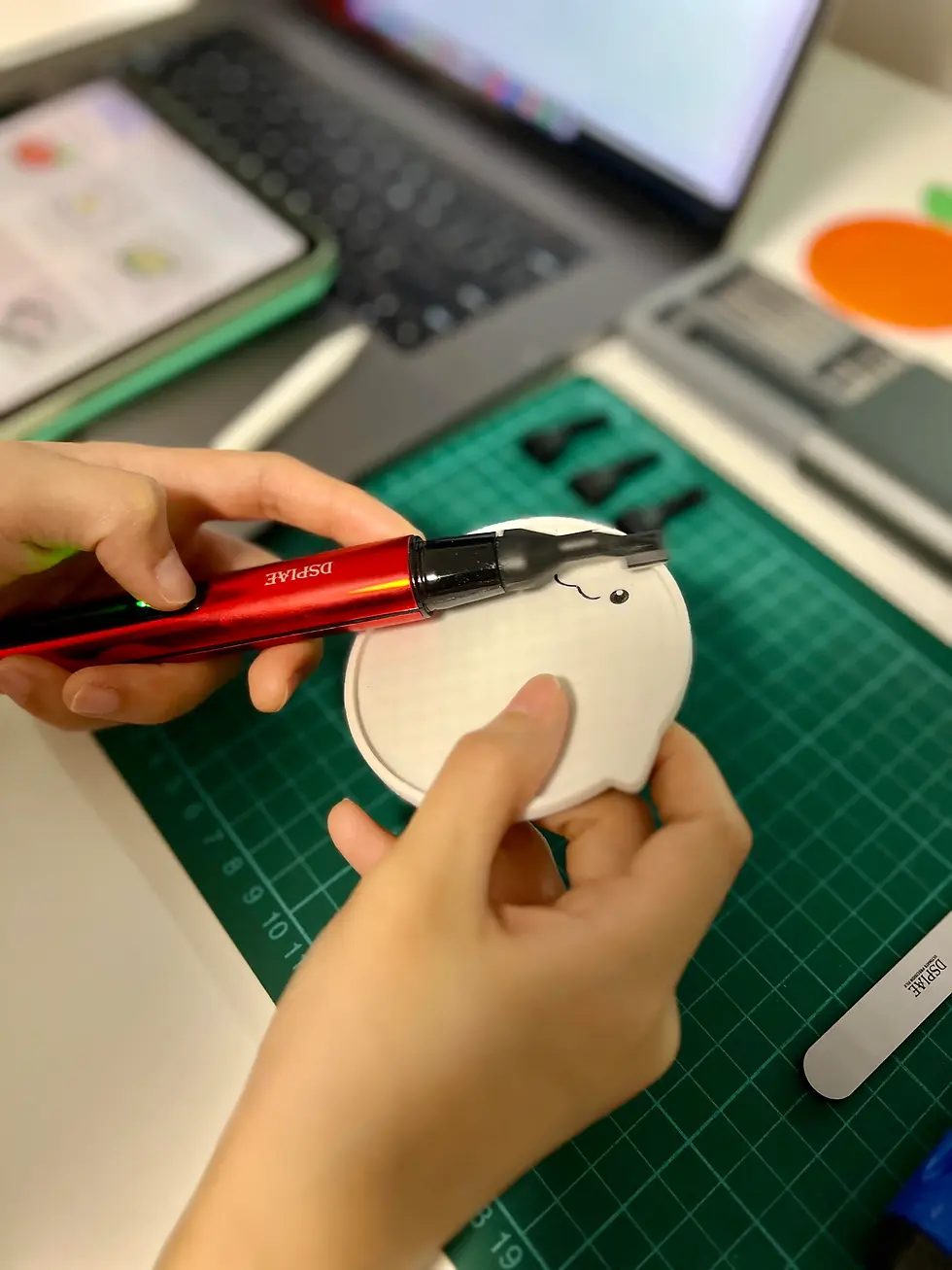
What she wants kaiyra.designs to become: a brand known for thoughtful, personalised pieces that feel meaningful rather than mass-produced. Objects that help people celebrate relationships, remember moments, feel a little more connected in their everyday lives.
Like the gua zi tray.
Clever design doesn’t just solve a functional problem; it supports behaviour. This tray, with its smiling centre cradling melon seeds, felt like kaiyra.designs understood that.
And here’s the thing: it still makes sense even now that CNY is over.
Because gua zi isn’t just festive. It’s cultural muscle memory.
If you're looking to commission something personal or festive, her Instagram is @kaiyra.designs.
Crack a seed. Stay awhile.
omg so cuteee